Neutralizing activity of anti-respiratory syncytial virus monoclonal antibody produced in Nicotiana benthamiana
Respiratory Syncytial Virus (RSV) is a highly contagious virus affecting the lungs. While mild for most adults, it can cause dangerous lung infections like pneumonia in infants and the elderly.
Doctors protect high-risk groups using vaccines or lab-made immune proteins called monoclonal antibodies (mAbs). However, making these antibodies in animal cells is very expensive.
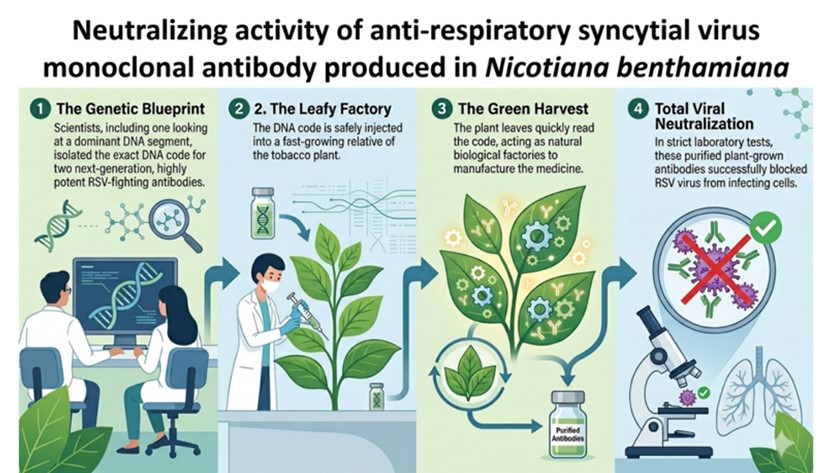
To find a cheaper alternative, scientists turned to plants. They put the genetic code for two powerful RSV antibodies into a plant virus, which delivered the instructions into Nicotiana benthamiana (a tobacco relative). The plant leaves read the code and manufactured the antibodies, which scientists then harvested and purified.
In lab tests, these plant-grown antibodies successfully latched onto the RSV virus and neutralized it, stopping it from infecting cells. This proves plants can serve as budget-friendly factories for life-saving medicine.