Identifying GFAP-expressing cell susceptibility to SARS-CoV-2 infection using human iPSC-derived neural cells
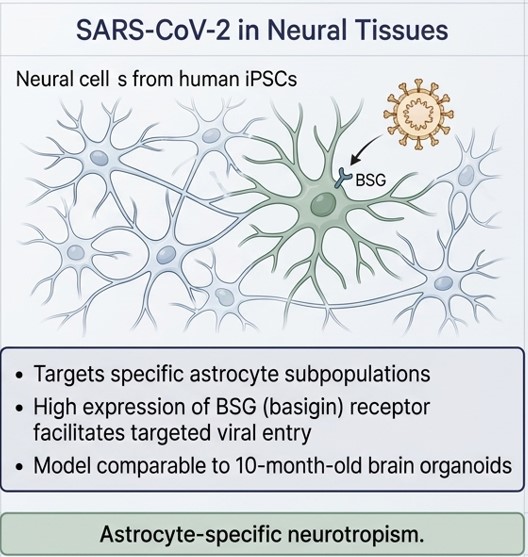
Neurological symptoms are common in COVID-19, but studying them has been difficult due to a lack of realistic laboratory models. Researchers successfully created a 2D neural cell model derived from human stem cells (iPSCs) to study how SARS-CoV-2 affects the brain. Remarkably, after just two weeks, this 2D model achieved the same complex variety of brain cell subtypes usually found in much older, complex 10-month-old brain organoids.
Key Findings
Astrocytes Targeted: The virus did not infect all brain cells equally; it was predominantly attracted to astrocytes (star-shaped cells that support neurons).
Infection Pathway: Researchers discovered that a specific entry protein called BSG was highly expressed on these astrocytes, explaining their vulnerability.
The Takeaway This rapid 2D stem cell model provides an efficient way to study how COVID-19 and other viruses attack brain tissue, opening doors for faster drug testing.