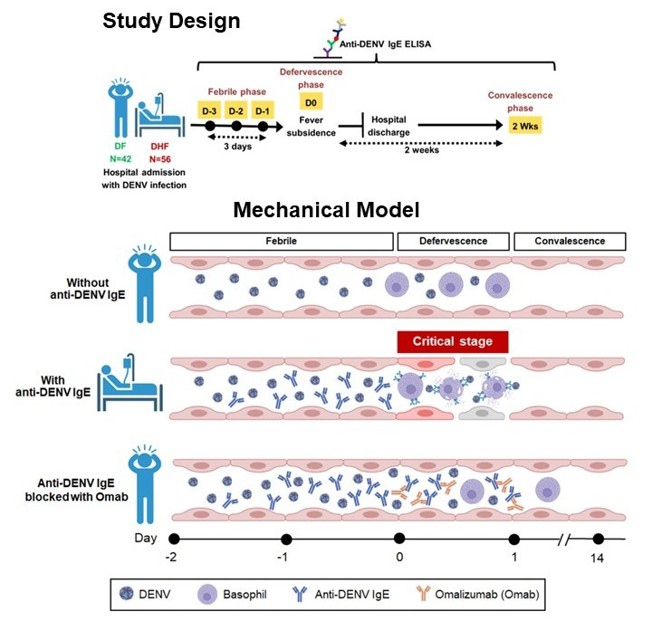
When dengue fever turns deadly, plasma leakage becomes the critical threat. This is especially dangerous during secondary infections with different dengue serotypes, where patients face significantly higher risks of severe complications. Now, researchers at Mahidol University have uncovered a previously overlooked immune mechanism that could explain and potentially treat this life-threatening complication. In a groundbreaking study published in Scientific Reports, the study discovered that dengue-specific IgE antibodies, typically associated with allergies, actually drive severe disease by activating immune cells called basophils precisely during the critical defervescence phase when plasma leakage occurs in secondary heterotypic infections.
The Discovery:
Tracking 98 dengue patients (42 DF, 56 DHF) through their illness, with most patients experiencing secondary infections (80.9% DF, 94.6% DHF), the study found that anti-DENV IgE levels spike at defervescence: the exact moment when severe complications begin. The breakthrough: Using RS-ATL8 basophil reporter cells, researchers proved these antibodies don’t just correlate with severity but actively trigger basophil activation through FcεRI receptors, particularly relevant in secondary heterotypic dengue infections.
Immediate Treatment Potential:
The most exciting finding? Omalizumab, an FDA-approved anti-IgE drug already used for severe asthma, completely blocked this dangerous activation in laboratory experiments. This means doctors could potentially intervene during the critical window when secondary dengue infections turn severe.
Clinical Impact:
The study suggests patients with elevated anti-DENV IgE during defervescence might benefit from targeted Omalizumab therapy alongside standard supportive care. This discovery opens possibilities for personalized dengue medicine, identifying high-risk patients through IgE testing and providing targeted intervention when it matters most, especially in secondary heterotypic infections where severe disease is most common.
Research led by Dr. Wilawan Chan-in and Associate Professor Dr. Ponpan Matangkasombut demonstrates how anti-DENV IgE can engage the FcεRI pathway and potentially contribute to dengue immunopathogenesis, providing a rationale for further investigation of IgE-targeted interventions.
📖 Read the Full Study: Scientific Reports (2026) DOI: https://doi.org/10.1038/s41598-026-43199-z
First Author: Wilawan Chan-in
Co-author: Vimvara Vacharathit
Corresponding Author: Ponpan Matangkasombut