Mechanisms and therapeutic implications of galectins regulating Epstein–Barr virus infection
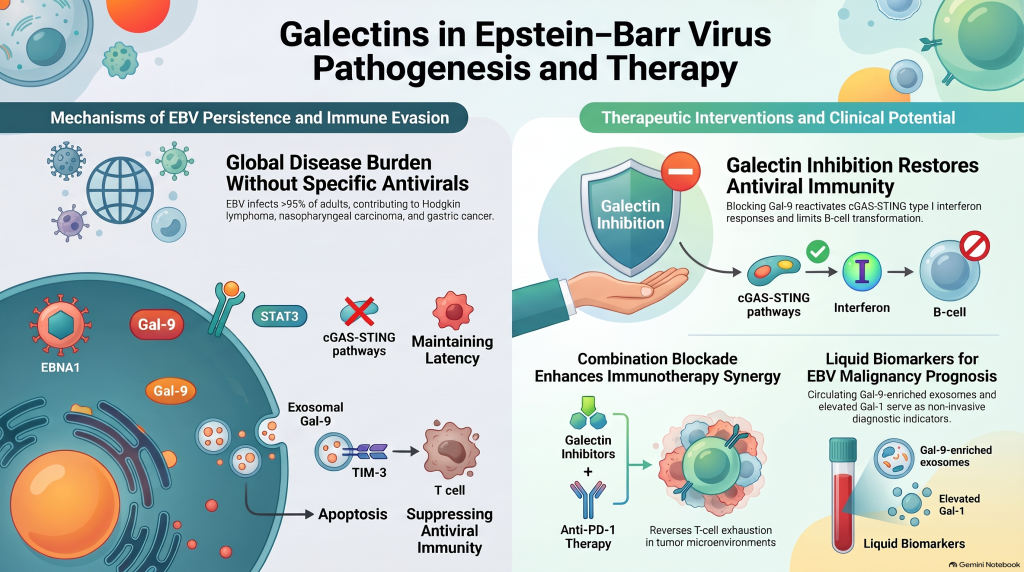
Epstein–Barr virus (EBV) establishes lifelong latency in over 95% of the adult population and is associated with various cancers. Currently, no specific anti-EBV drugs have been approved.
EBV utilizes host proteins known as galectins (Gal-1, Gal-3, and Gal-9) as key tools for immune evasion:
Gal-9: Inhibits intracellular antiviral signaling to maintain viral latency and is secreted via exosomes to suppress systemic immunity.
Gal-1: Impairs and destroys virus-fighting T cells, leading to functional loss.
Gal-3: Stimulates the growth and proliferation of cancer cells.
Inhibiting galectins represents a promising strategy to restore anticancer immunity, while blood galectin levels may serve as non-invasive biomarkers for disease monitoring. However, further research is required to clarify their distinct roles, functional redundancy, and stage-dependent changes during infection, alongside clinical testing prior to practical application.