Galectin-3 exacerbates influenza a virus pathogenesis via dual mechanisms: Promoting hemagglutinin-dependent entry and driving nlrp3 inflammasome activation
Influenza A viruses (such as H5N1, H7N9, and H1N1) cause severe lung inflammation through excessive activation of the NLRP3 inflammasome.
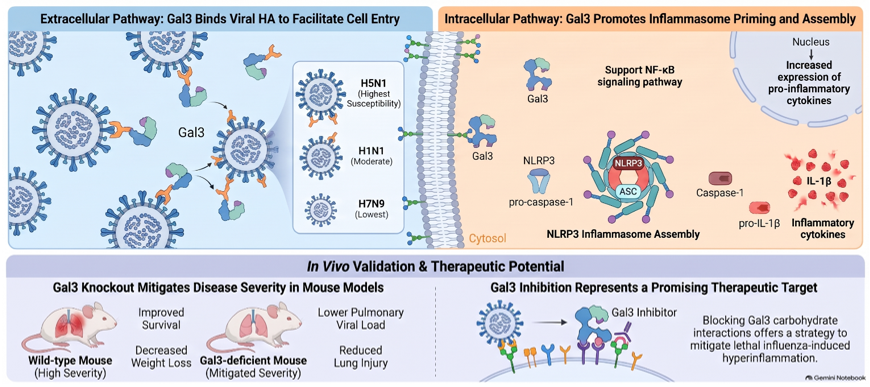
Research demonstrates that host Galectin-3 (Gal3) acts as a critical disease accelerator through a two-pronged mechanism:
Extracellularly (Viral Entry): Gal3 binds to viral hemagglutinin (HA) proteins to facilitate viral entry into cells, with the strongest effect observed in the H5N1 subtype.
Intracellularly (Inflammasome Activation): Gal3 activates NF-κB signaling and accelerates NLRP3 inflammasome assembly, triggering a massive release of the inflammatory cytokine IL-1β.
In animal experiments, Gal3-deficient (knockout) mice demonstrated significantly higher survival rates, reduced weight loss, lower viral loads, and attenuated lung inflammation. These findings highlight Gal3 inhibition as a promising novel therapeutic target to mitigate severe influenza hyperinflammation.