ECDD-S16, a synthetic derivative of cleistanthin A, suppresses pyroptosis in Burkholderia pseudomallei-infected U937 macrophages
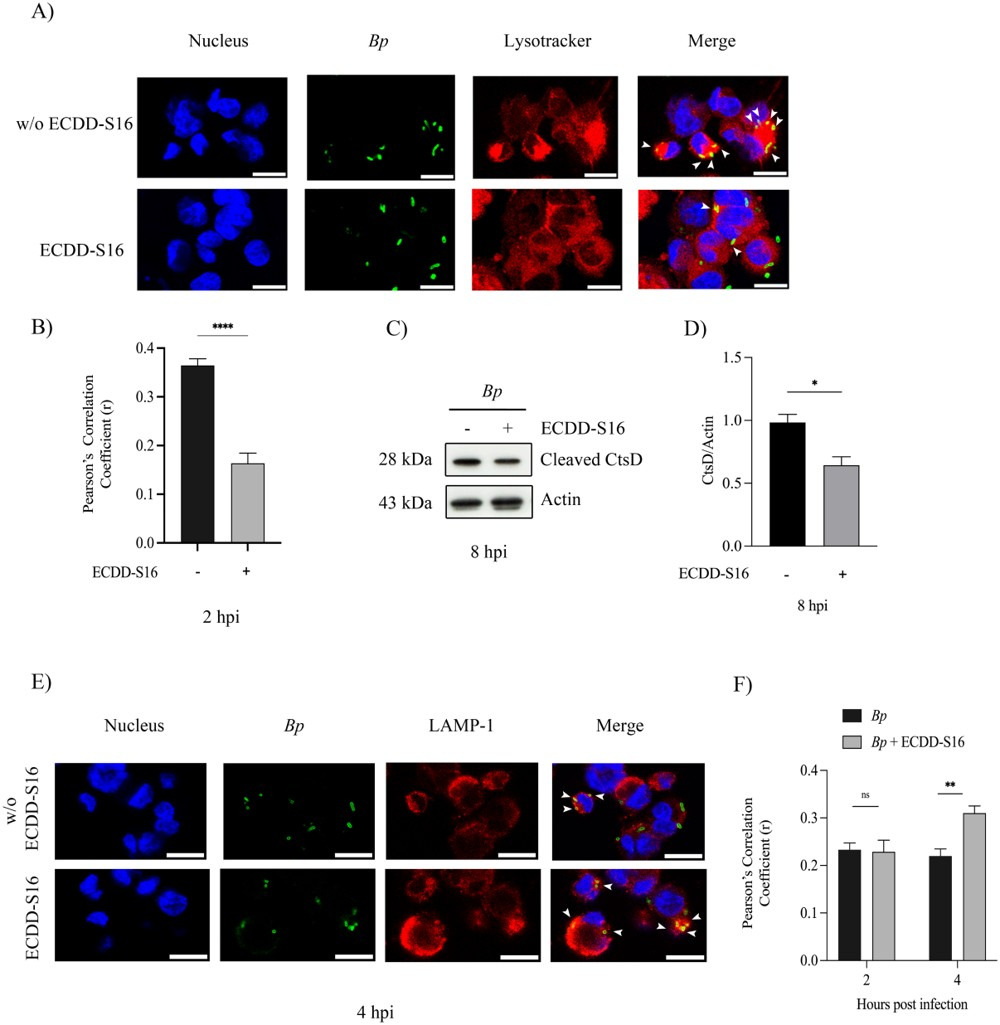
Melioidosis is an infectious disease caused by an intracellular Gram-negative bacterium, Burkholderia pseudomallei, which is a common cause of community-acquired sepsis in Southeast Asia and Northern Australia. The mortality rate in acute melioidosis patients, which is caused by sepsis, is very high (47.1%). Therefore, reducing inflammation may lead to the treatment of patients with acute melioidosis. Previously, ECDD-S16 was reported to be a potential compound for inhibiting inflammatory cell death (pyroptosis). In this study, we further investigated the involvement of ECDD-S16 in pyroptosis induced by B. pseudomallei in the U937 human macrophage cell line. The results showed that ECDD-S16 decreased LDH release and levels of pyroptosis-related proteins in B. pseudomallei-infected cells by inhibiting phagolysosome acidification. Moreover, the attenuation of pyroptosis did not interfere with the intracellular survival of B. pseudomallei in U937 macrophages. Our findings indicated that ECDD-S16, a novel compound, interferes with caspase-1/4/5 activation, which may lead to the prevention of sepsis in acute melioidosis patients.