Evidence of Mpox clade IIb infection in primary human alveolar epithelium
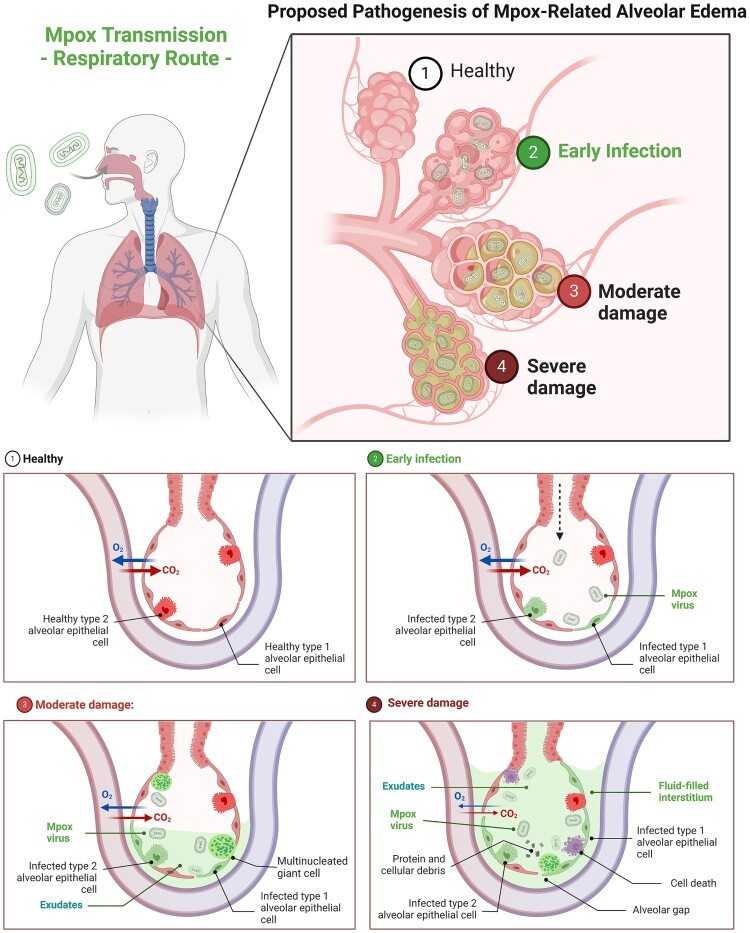
While Mpox is known for skin-to-skin and sexual transmission, its impact on the deep lungs was previously unexplored. Researchers used an advanced human lung cell model (hAECs) to study how Mpox virus clade IIb affects respiratory tissue. They demonstrated that Mpox successfully infected over 42% of the lung cells. The virus destroyed the protective lung barrier, causing cell fusion and loss of structural proteins. Remarkably, this severe lung damage occurred without triggering a strong inflammatory response (such as spikes in IL-6 or TNF-α). Mpox clade IIb is fully capable of respiratory transmission and can cause significant lung damage. Crucially, it appears to quietly evade the immune system by damaging tissue without setting off typical inflammatory alarms. These findings confirm the respiratory transmission potential of Mpox clade IIb and highlight its ability to cause lung pathogenesis without typical inflammatory signals.