Plant-based production and characterization of monoclonal antibodies targeting extracellular enveloped proteins of the Mpox Virus
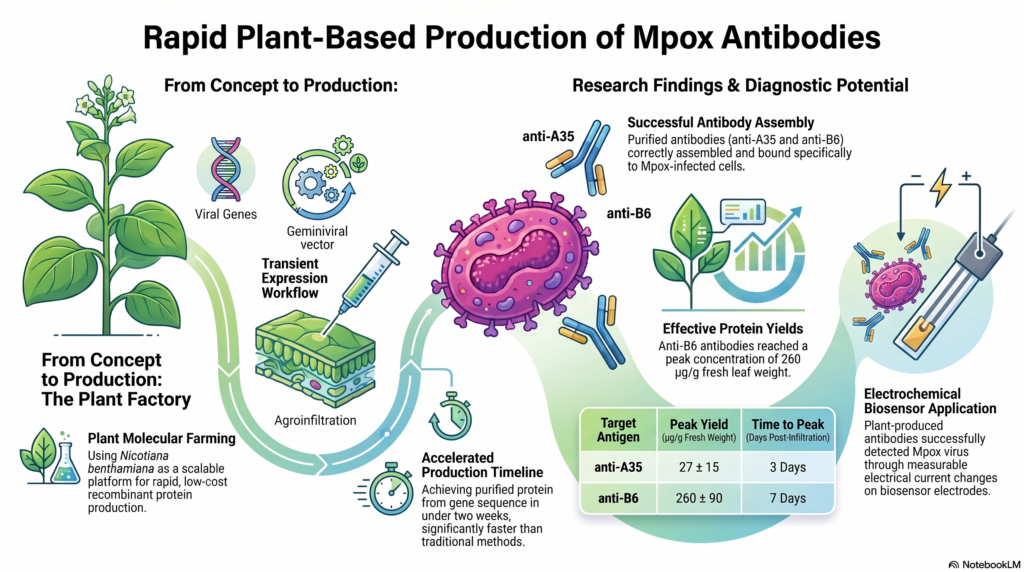
Recent Mpox outbreaks have highlighted the urgent need for affordable diagnostics and treatments. This study explores using plants (Nicotiana benthamiana) as ‘biofactories’ to produce monoclonal antibodies (mAbs) against the Mpox virus, offering a faster and more cost-effective alternative to traditional mammalian cell systems
Researchers successfully produced antibodies targeting two key Mpox proteins, A35 and B6, with production peaking at 3 days for anti-A35 and 7 days for anti-B6 after the plants were treated. Laboratory tests confirmed that these plant-made antibodies were correctly assembled and could specifically bind to cells infected with Mpox. Additionally, the antibodies performed exceptionally well when integrated into an electrochemical immunosensor, enabling rapid and effective virus detection.
The study concludes that plant-based production is a viable and rapid platform for creating Mpox-specific antibodies. This technology provides a scalable solution for developing diagnostic tools and supporting antiviral research, ultimately enhancing global preparedness for future outbreaks.